
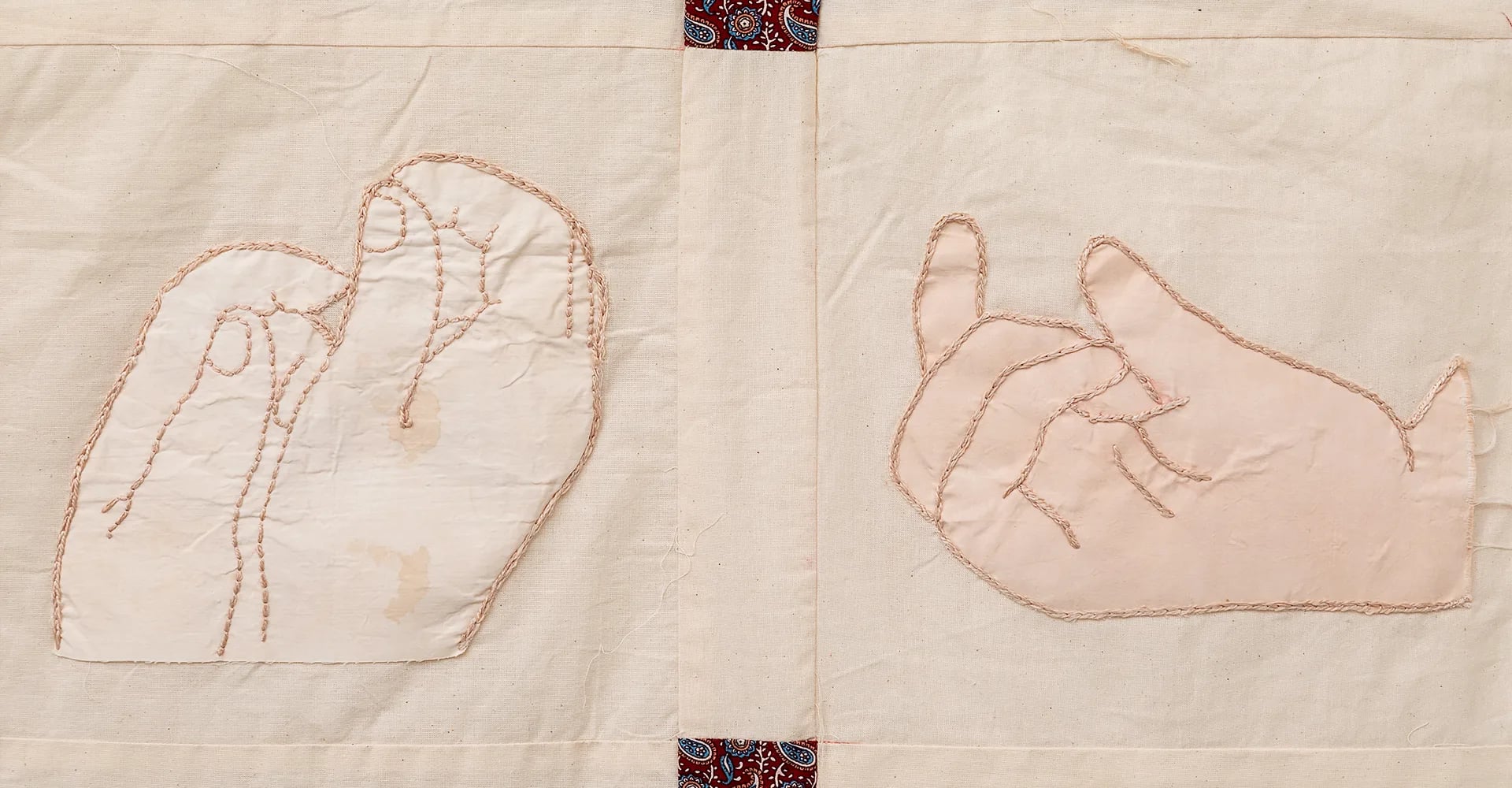
Zulfiya Spowart represented Uzbekistan at the 61st International Art Exhibition of La Biennale di Venezia, presenting her work as part of ‘The Aural Sea’ at the Arsenale. The Uzbekistan Pavilion brought together seven artists whose practices approached the Aral Sea through ecological imagination, exploring the relationship between environmental change, memory and collective experience.
In conversation with FORA, Spowart discusses the evolution of her artistic practice: from her training in monumental art and painting in Uzbekistan to her current work with reclaimed clothing, vintage textiles, embroidery, natural dyes and textile sculpture.
For Spowart, textiles are more than materials. They carry familial histories and cultural memory. For the artist, vintage fabrics collected in Uzbekistan, inherited clothing and patterns that have travelled between cultures become part of an ongoing investigation into migration, belonging and identity.
She also reflects on motherhood and care as formative experiences within her practice. The body, intimacy and the fleeting nature of early childhood become subjects through which she considers how identity is shaped biologically, culturally and socially.
Throughout the conversation, Spowart considers textile as a living material: one that fades, changes, responds to light and humidity, and continues to transform after an artwork leaves the artist’s hands.
Her practice ultimately asks how cultural knowledge and identity are carried forward through material, embodied experience and continued making.