Every culture develops its own ways of carrying knowledge across generations.
Archives, manuscripts, monuments, maps and collections preserve part of that inheritance. Across much of the human history, they have become the primary framework for tradition to be recorded, authenticated, and transmitted. Yet they have never carried it alone. Memory has always moved through people as much as through documents, through practice as much as through record.
Central Asia makes this especially visible. Over centuries, political borders shifted, empires expanded and collapsed, and communities were displaced, making the region one of continual transformations. Periods of censorship repeatedly exposed the limitations of official institutions as the sole guarantors of cultural continuity. What endured was the knowledge that remained in circulation within society.
Culture survived because it was practiced.
It lived in the body: in principles of weaving and embroidery, in preparation of food, in cultivation of land, in rituals of mourning and celebration, in buildings shaped by climate and terrain, in oral storytelling, music, craftsmanship, and the countless gestures through which one generation taught the next how to inhabit the world. These practices carried forms of social memory that no document could fully contain. They did not replace the archive; they expanded what an archive could be.
In the contemporary context, art extends this form of archiving. It creates a space for the knowledge to acquire continuity through collective and individual practices. Long before knowledge is recorded and catalogued, it is carried by the body and passed through human hands.
Featuring four prominent contemporary artists engaging with the cultural systems and traditions of Central Asia, FORA Gallery is pleased to announce its autumn exhibition program with ‘The Human Thread’, approaching contemporary art through this continuum.
Guzel Zakir, Huseyn Jalil, and Serafim Dim, alongside guest artist Altynai Osmo, engage deeply with the region through textile and embroidery practices, pigments and traditions of Eastern writing and painting, architectural and structural principles, oral traditions, rituals of everyday life, and forms of ecological knowledge rooted in local cultural practices. The works that emerge from this inquiry offer new ways of encountering the region itself — its landscapes, materials, and layered histories.
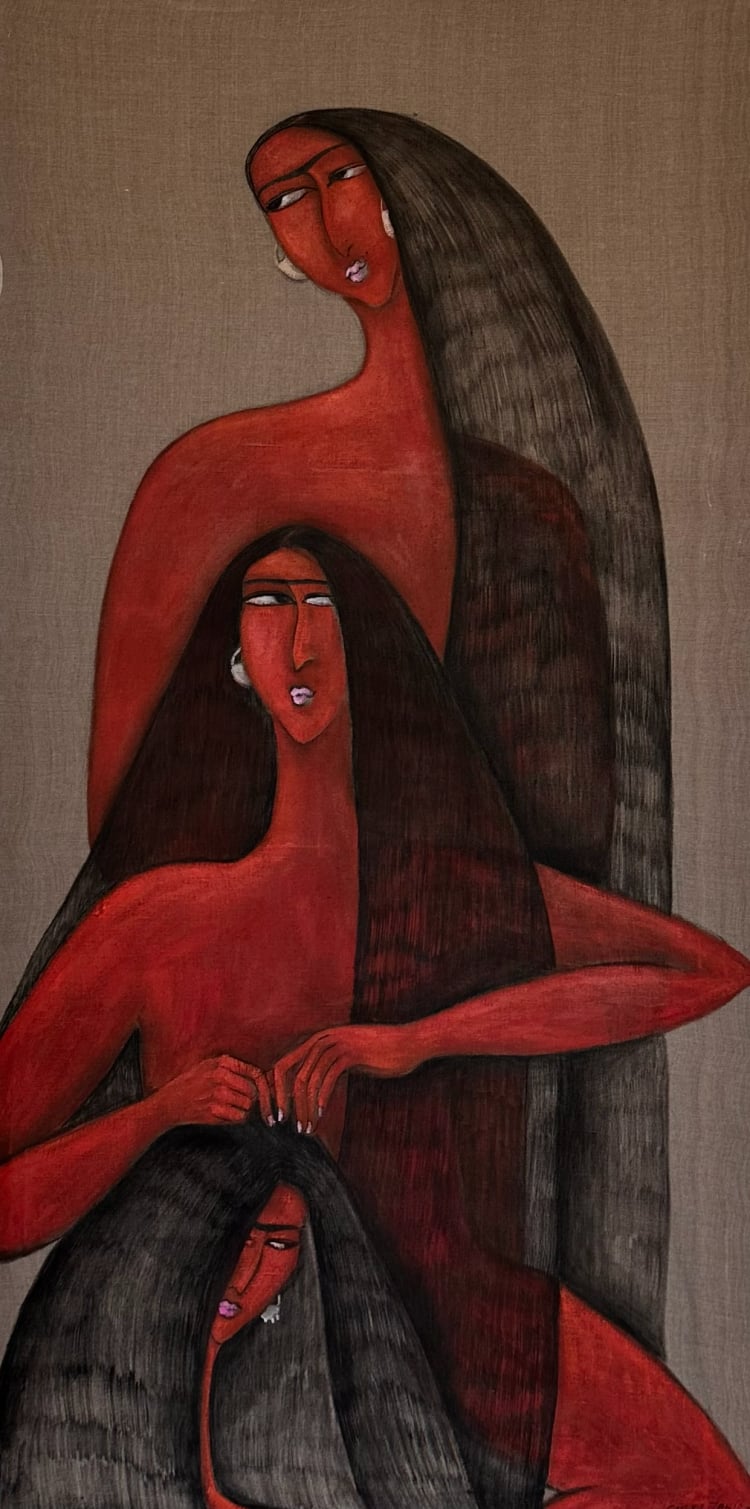
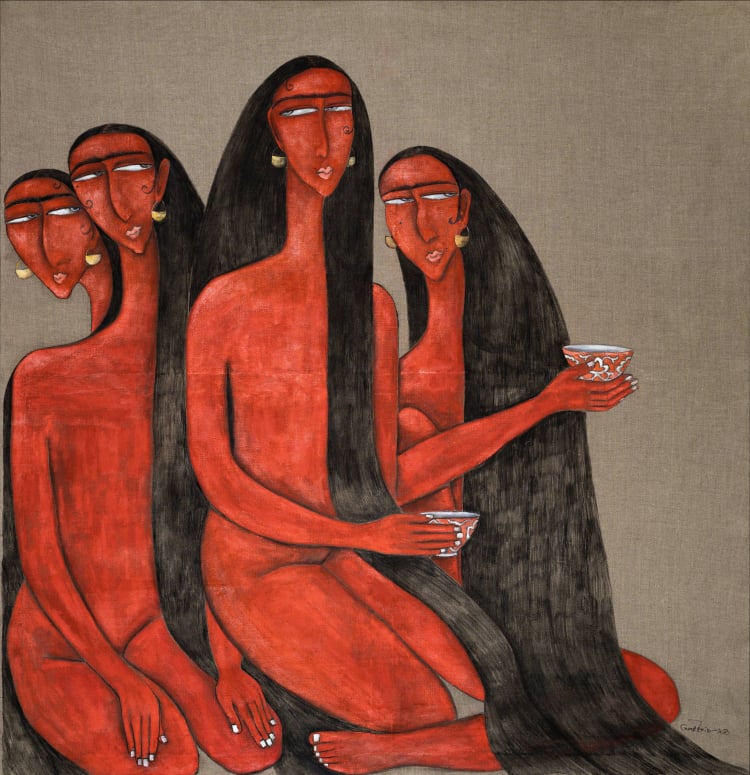
Guzel Zakir draws on the legacies of Kazakhstan’s Uyghur community
through a recurring vocabulary of female figures rendered in red. Drawn from the women around her, these figures reflect rituals of everyday life. Immersed in centuries-old principles of collective life, Zakir’s women embody forms of mutual care through gestures such as tending of one another’s hair. They hold traditional piyalas and adorn themselves with small flowers resembling hanging clusters of grapes, known locally as Qamchegül, worn behind the ear as part of a longstanding tradition.
Red occupies a particular place in this imagery. Inspired by the ancient Uyghur Buddhist murals known as the “Red Caves” of Xinjiang, Zakir uses red as a carrier of identity and belonging.
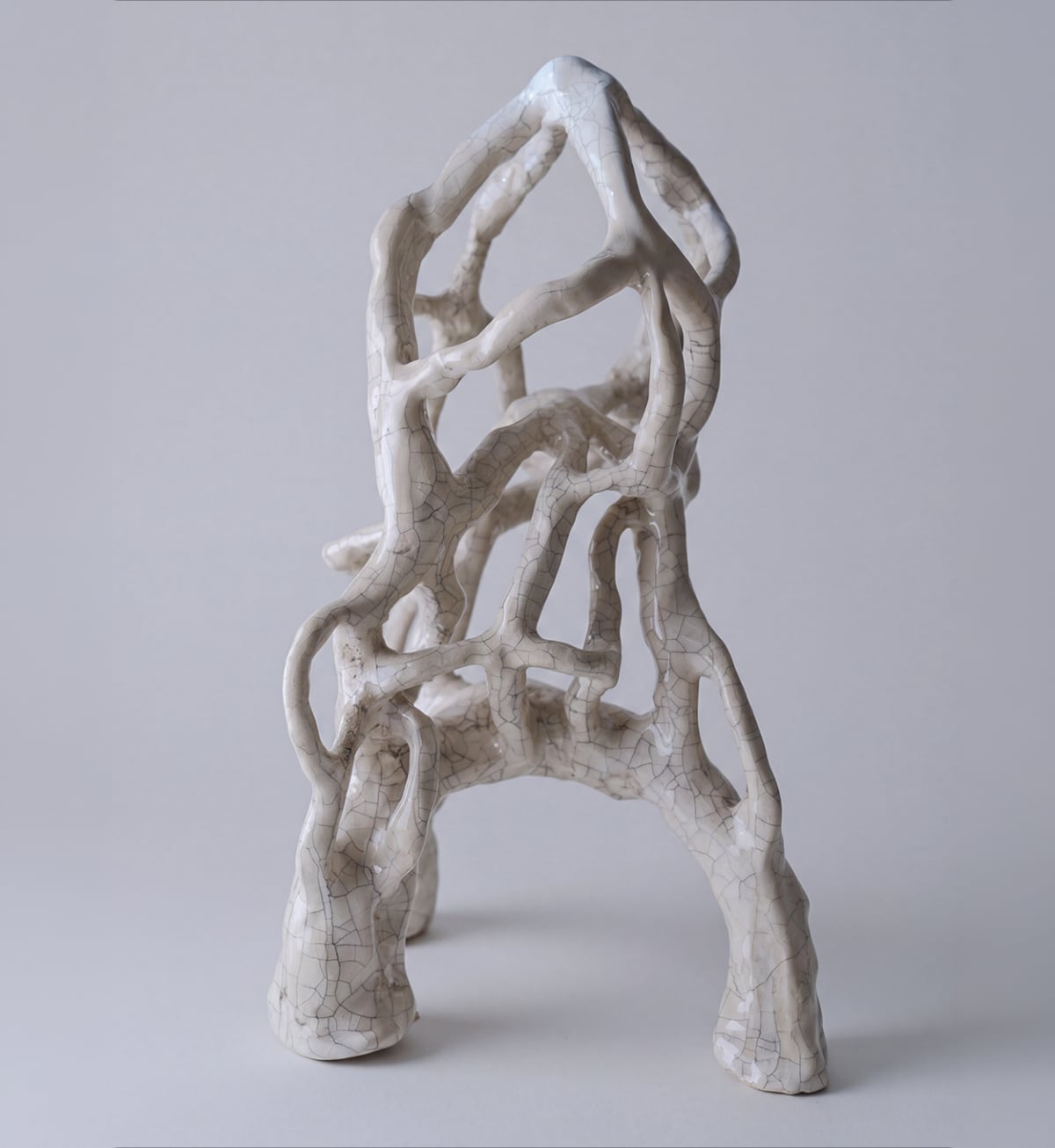
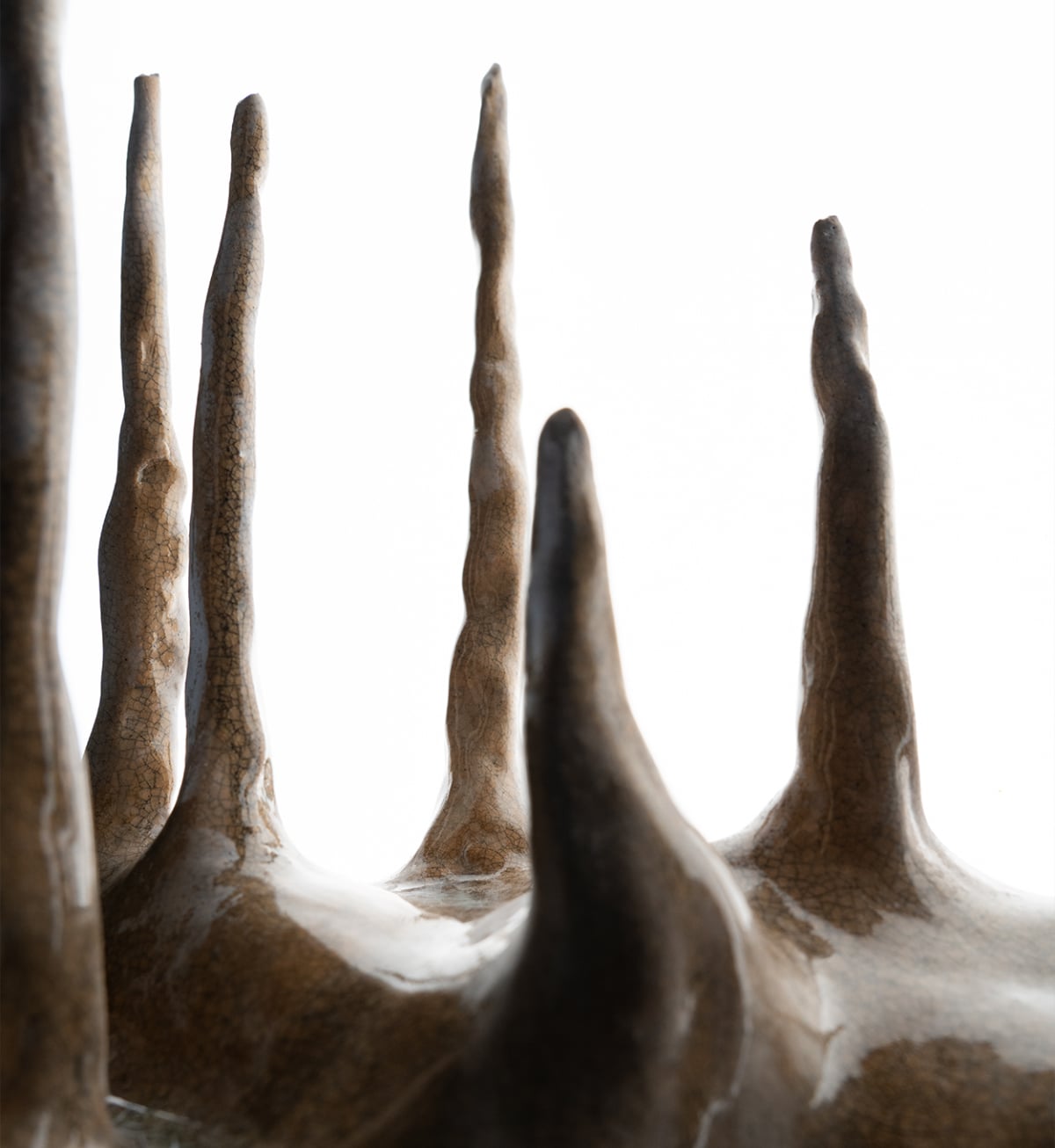
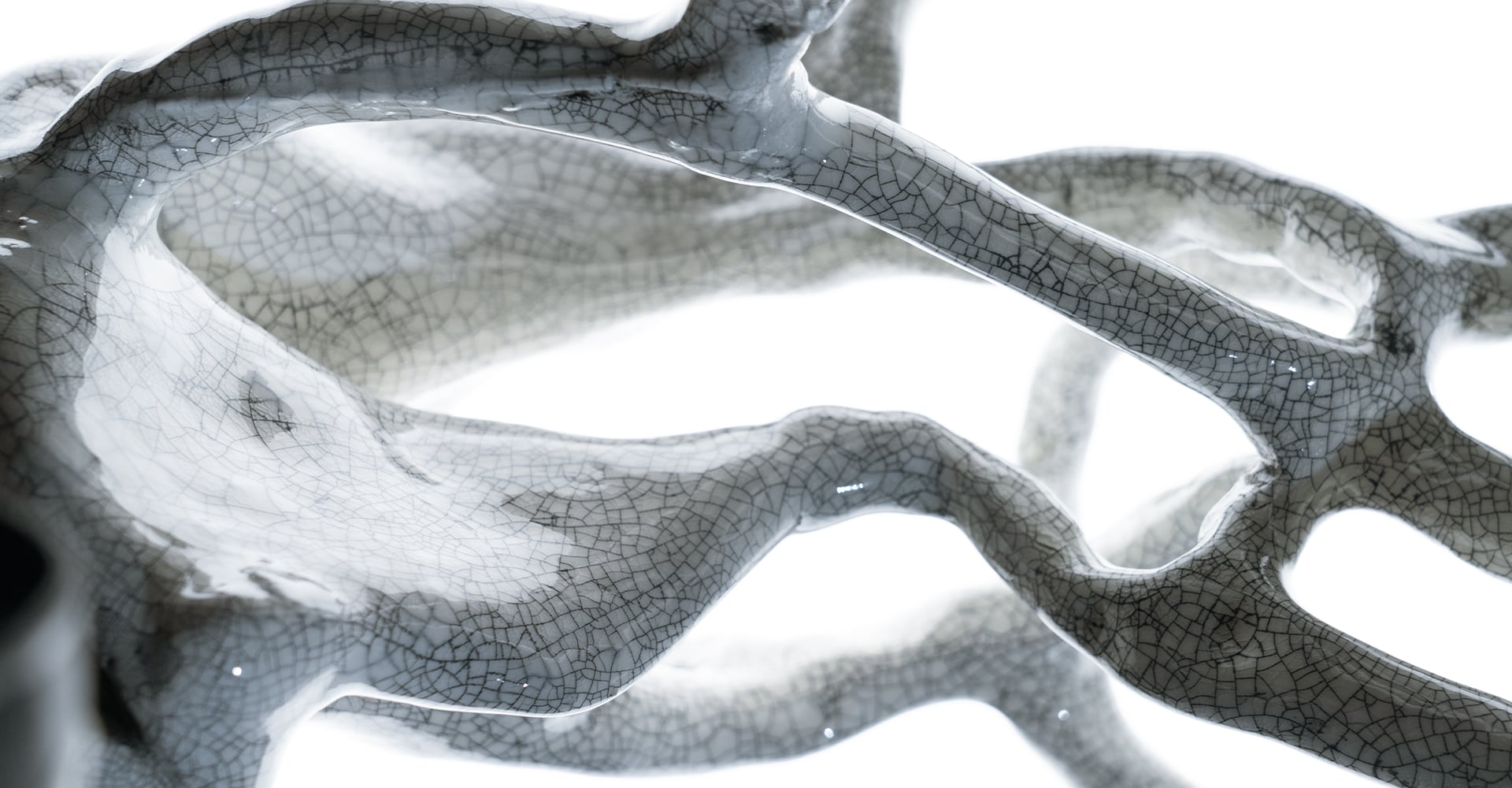
Huseyn Jalil approaches tradition through an inquiry into material, structure, and the systems of formation.
The exhibition presents sculptures from his latest series, ‘Polytypes’.
Drawing on principles shared by crystallographic growth, mineral accretion, and biological morphogenesis, Jalil examines processes of material organization and investigates structural coherence.
In his works on paper, this interest continues through an investigation of pigment and its behavior on the surface. Their rhythm and distribution of color create a visual affinity with ikat and regional traditions of silk painting, while the artist engages with Eastern traditions of pigment use, including pigments traditionally used in Persian calligraphy, alongside natural pigments derived from organic and mineral materials.
For Serafim Dim, continuity is sustained through craft, myth, and the direct transmission of knowledge from master to apprentice.
The artist engages with traditional Central Asian imagery associated with ancient seasonal rituals and the relationship between human beings and their environment.
A central figure within this visual system is Ajdaho, the mythological dragon associated with water, rain, and the forces of nature. In Dim’s interpretation, Ajdaho becomes the guardian of craft, a spirit that accompanies the maker, guides the master’s hand, and passes from one generation to the next. For the artist, craft encompasses and carries accumulated experience that is preserved solely through the act of making.
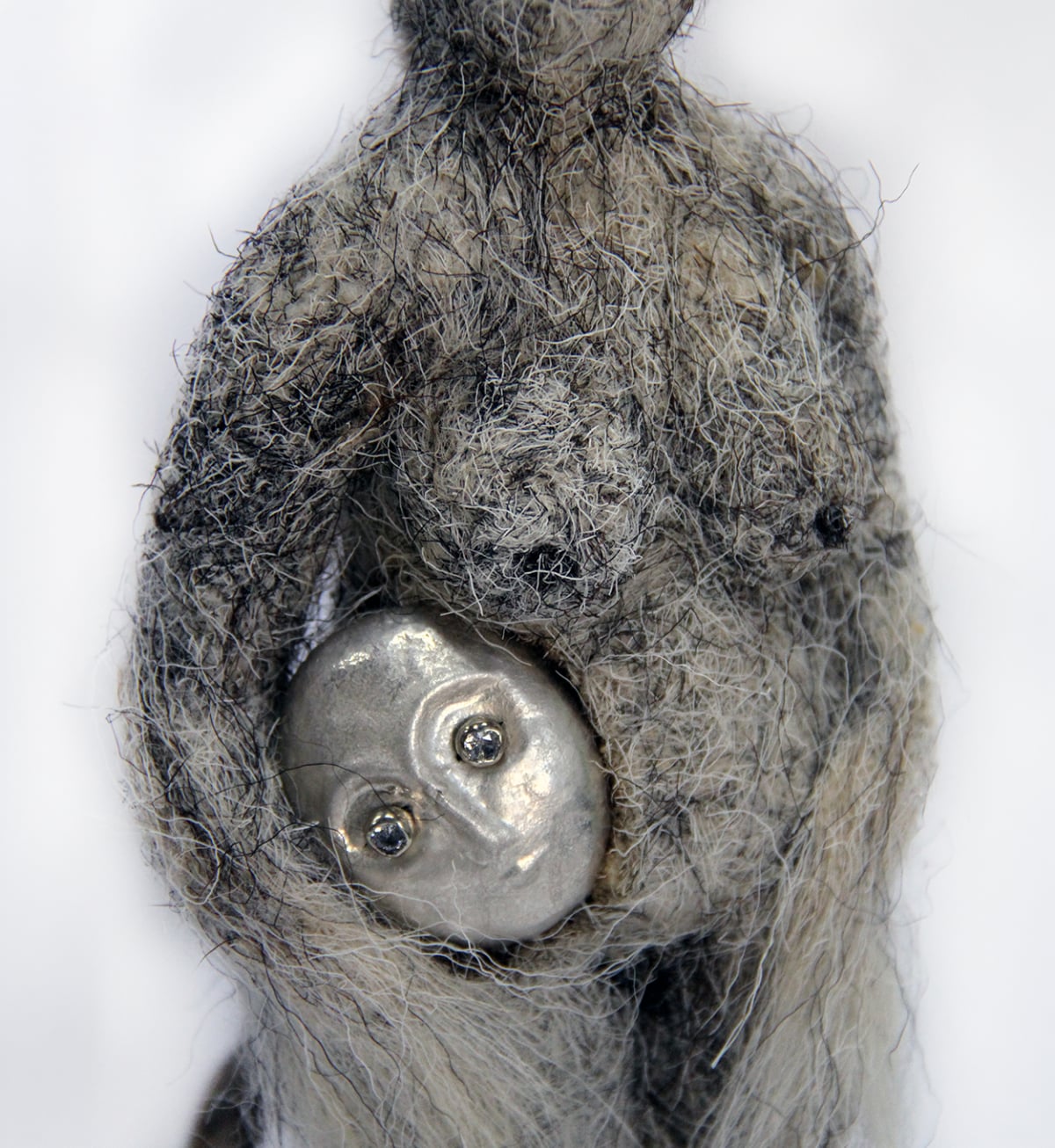
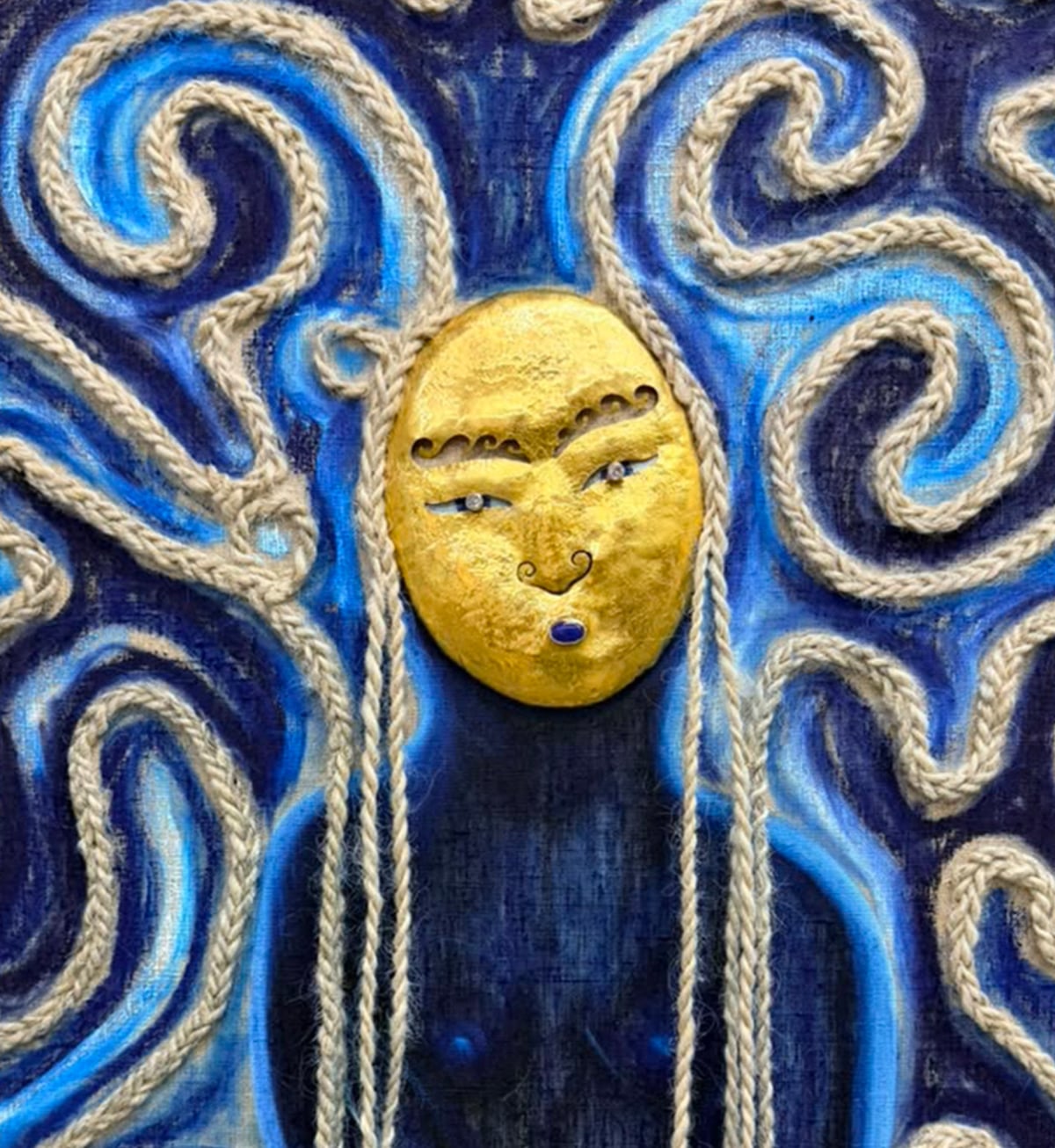
Altynai Osmo approaches Central Asian cultural memory through the relationship between image, material, and language.
In her compositions, felt, embroidery, pigment, metal, and text operate as interconnected systems, where ornament structures the surface, embroidery establishes its rhythm, and text introduces another register of meaning. Osmo incorporates proverbs and sayings into the stitched surface, bringing together two forms of cultural continuity that have often operated in parallel: knowledge preserved through making and knowledge preserved through oral tradition.
Presented across two showcases, the exhibition unfolds in:
Paris, France
23–27 September 2026
Geneva, Switzerland
1–7 October 2026
Every culture develops its own ways of carrying knowledge across generations.
Archives, manuscripts, monuments, maps and collections preserve part of that inheritance. Across much of the human history, they have become the primary framework for tradition to be recorded, authenticated, and transmitted. Yet they have never carried it alone. Memory has always moved through people as much as through documents, through practice as much as through record.
Central Asia makes this especially visible. Over centuries, political borders shifted, empires expanded and collapsed, and communities were displaced, making the region one of continual transformations. Periods of censorship repeatedly exposed the limitations of official institutions as the sole guarantors of cultural continuity. What endured was the knowledge that remained in circulation within society.
Culture survived because it was practiced.
It lived in the body: in principles of weaving and embroidery, in preparation of food, in cultivation of land, in rituals of mourning and celebration, in buildings shaped by climate and terrain, in oral storytelling, music, craftsmanship, and the countless gestures through which one generation taught the next how to inhabit the world. These practices carried forms of social memory that no document could fully contain. They did not replace the archive; they expanded what an archive could be.
In the contemporary context, art extends this form of archiving. It creates a space for the knowledge to acquire continuity through collective and individual practices. Long before knowledge is recorded and catalogued, it is carried by the body and passed through human hands.
Featuring four prominent contemporary artists engaging with the cultural systems and traditions of Central Asia, FORA Gallery is pleased to announce its autumn exhibition program with ‘The Human Thread’, approaching contemporary art through this continuum.
Guzel Zakir, Huseyn Jalil, and Serafim Dim, alongside guest artist Altynai Osmo, engage deeply with the region through textile and embroidery practices, pigments and traditions of Eastern writing and painting, architectural and structural principles, oral traditions, rituals of everyday life, and forms of ecological knowledge rooted in local cultural practices. The works that emerge from this inquiry offer new ways of encountering the region itself — its landscapes, materials, and layered histories.
Guzel Zakir draws on the legacies of Kazakhstan’s Uyghur community
through a recurring vocabulary of female figures rendered in red. Drawn from the women around her, these figures reflect rituals of everyday life. Immersed in centuries-old principles of collective life, Zakir’s women embody forms of mutual care through gestures such as tending of one another’s hair. They hold traditional piyalas and adorn themselves with small flowers resembling hanging clusters of grapes, known locally as Qamchegül, worn behind the ear as part of a longstanding tradition.
Red occupies a particular place in this imagery. Inspired by the ancient Uyghur Buddhist murals known as the “Red Caves” of Xinjiang, Zakir uses red as a carrier of identity and belonging.
Huseyn Jalil approaches tradition through an inquiry into material, structure, and the systems of formation.
The exhibition presents sculptures from his latest series, ‘Polytypes’.
Drawing on principles shared by crystallographic growth, mineral accretion, and biological morphogenesis, Jalil examines processes of material organization and investigates structural coherence.
In his works on paper, this interest continues through an investigation of pigment and its behavior on the surface. Their rhythm and distribution of color create a visual affinity with ikat and regional traditions of silk painting, while the artist engages with Eastern traditions of pigment use, including pigments traditionally used in Persian calligraphy, alongside natural pigments derived from organic and mineral materials.
For Serafim Dim, continuity is sustained through craft, myth, and the direct transmission of knowledge from master to apprentice.
The artist engages with traditional Central Asian imagery associated with ancient seasonal rituals and the relationship between human beings and their environment.
A central figure within this visual system is Ajdaho, the mythological dragon associated with water, rain, and the forces of nature. In Dim’s interpretation, Ajdaho becomes the guardian of craft, a spirit that accompanies the maker, guides the master’s hand, and passes from one generation to the next. For the artist, craft encompasses and carries accumulated experience that is preserved solely through the act of making.
Altynai Osmo approaches Central Asian cultural memory through the relationship between image, material, and language.
In her compositions, felt, embroidery, pigment, metal, and text operate as interconnected systems, where ornament structures the surface, embroidery establishes its rhythm, and text introduces another register of meaning. Osmo incorporates proverbs and sayings into the stitched surface, bringing together two forms of cultural continuity that have often operated in parallel: knowledge preserved through making and knowledge preserved through oral tradition.
Presented across two showcases, the exhibition unfolds in:
Paris, France
23–27 September 2026
Geneva, Switzerland
1–7 October 2026