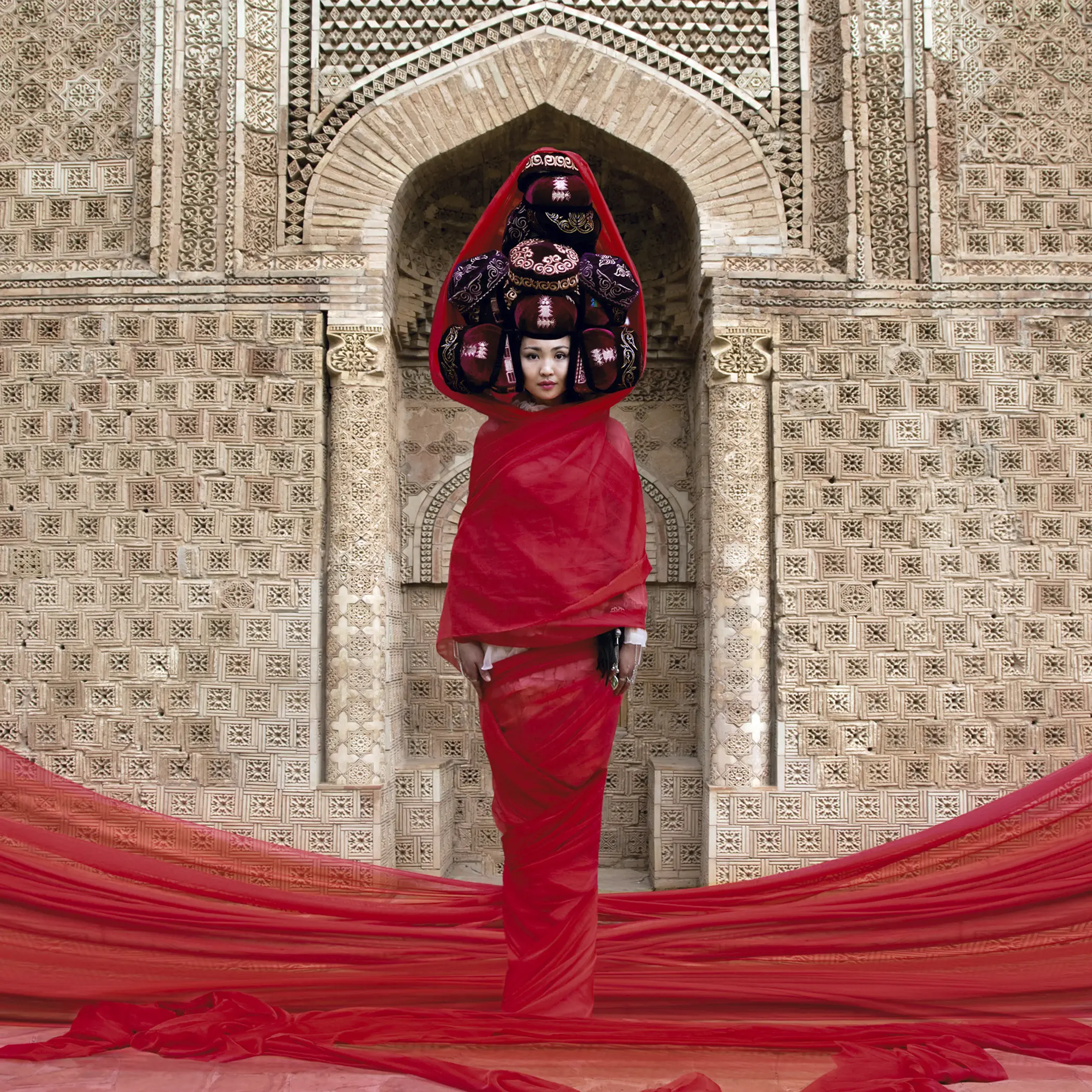
From the very start, artistic education was for her not only a personal pursuit but a conscious choice of social stance. In the late 1980s, Almagul Menlibayeva enrolled at Kazakh National Academy of Arts, choosing the Department of Decorative and Applied Arts with a deliberate focus on textile practices.
At the time, painting and sculpture remained highly regulated by ideological imperatives, particularly after the December 1986 events, as students at the Academy faced direct pressure and centralized control from Moscow.
Textiles offered Menlibayeva a way to step beyond a colonial system of thought and turn toward a different, nearly erased body of knowledge rooted in Kazakh nomadic culture and its material languages. Felt, ornamentation, embroidery, and their historical migrations became central points of inquiry in her early practice. She rejected the decorative categorization imposed by socialist discourse, approaching these artistic currents and materials as an independent system of cultural codes. The folk arts, created primarily by women and maintained for centuries outside market and institutional structures, offered Menlibayeva a sense of the sacred – a value surpassing financial or temporal calculation.
This interest was further sharpened by Kazakhstan’s socialist industrial context, structured around large-scale resource extraction and construction projects that reshaped the steppe landscapes over decades. In this context, the logic of nomadic life, guided by a respect for the natural order, provided the artist with a fundamentally distinct perspective on the world.
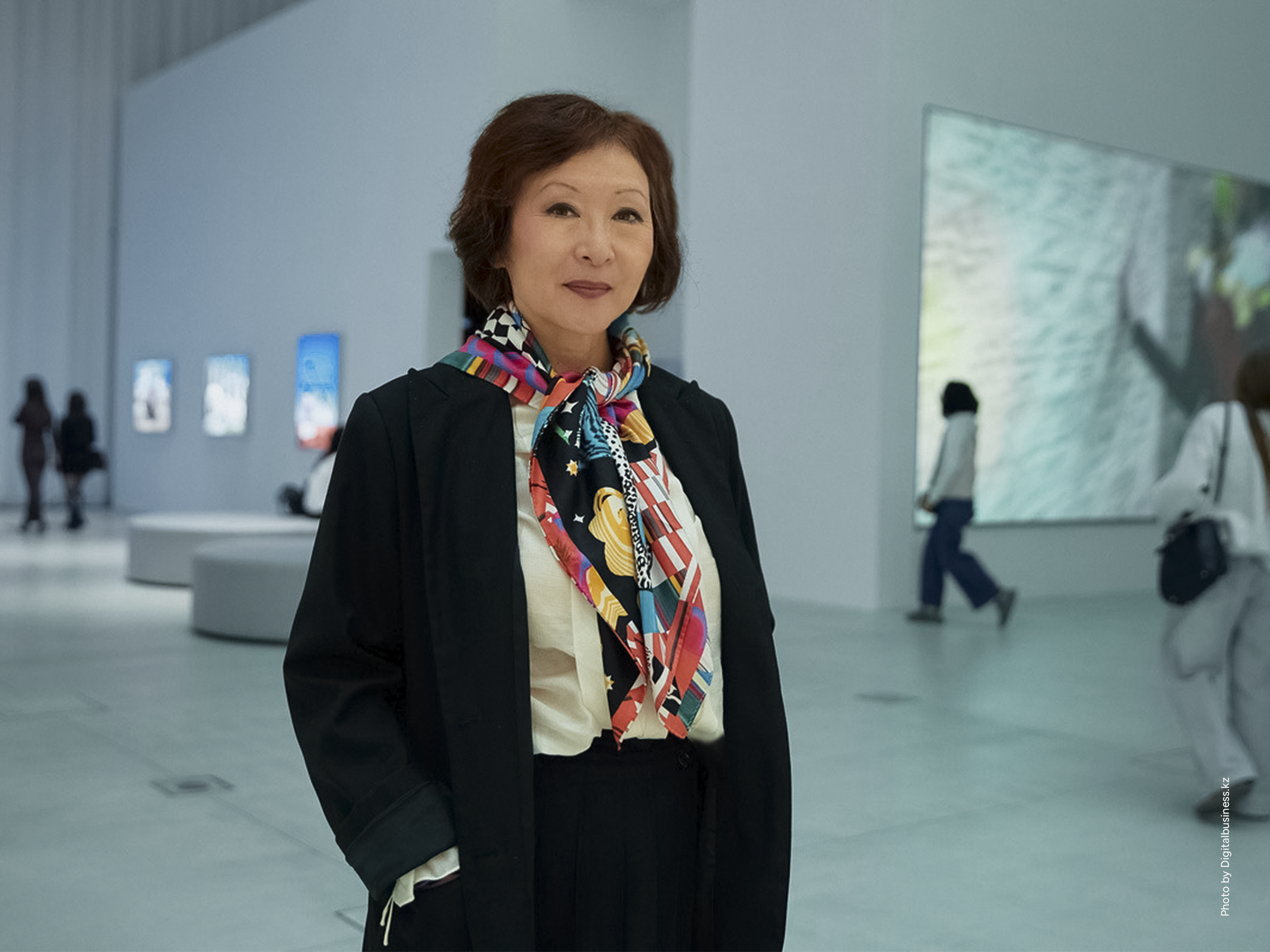
In conversation with Fora Gallery, Almagul Menlibayeva traces the evolution of her practice over decades, from the legacies of Kazakh craft to her recent reimaginings of post-colonial histories and identities.
The inaugural exhibition at Almaty’s new Museum of Arts
placed Menlibayeva’s work in a comprehensive retrospective, tracing the evolution of her practice alongside Kazakhstan’s shifting social and political landscape over the recent decades.
The museum is the initiative of collector Nurlan Smagulov, whom Menlibayeva has known for more than thirty years. Smagulov’s collection spans Kazakh modernism from the 1970s through the post-Soviet period, encompassing the years of perestroika and the country’s transition to independence. In Menlibayeva’s words, it brings together “different artists, different styles” and is “a very good story for Kazakhstan”.
The exhibition includes her early grattage paintings, originating from her involvement with the ‘Green Triangle’, an underground collective of young poets, philosophers, and artists active in late-Soviet Kazakhstan. “It was a period of collapse”, she recalls. “Everyone understood that the Soviet future was ending. We were young, not just painters, but poets and thinkers with alternative ideas. We made whatever felt free to us, based on the knowledge we had”.
Menlibayeva’s experience with the ‘Green Triangle’ gave her an independent perspective. “When you look back, you come to understand what is happening in the present and where to move in the future”, she explains. For her, it was crucial to recognize that if the past is constructed by others, a society loses the power to shape its future. This awareness informs her projects, as they extend beyond Soviet and post-Soviet narratives to engage with ancestral and environmental legacies. “It’s not just about human ancestors”, she adds. “Ancestors include water and nature. There was a time when people did not see themselves as the center of the universe – they were part of a larger system”.
The artist’s archival practice draws on personal memory:
“I often reflect on the past, reinterpreting and reframing it from a contemporary perspective”, she notes. Reflecting on an essential component of this practice – her fieldwork across Central Kazakhstan, including the Karaganda region, Menlibayeva notices: “My mother was born not far from Karaganda. This territory was part of the Gulag. The Karaganda labor camp (Karlag) was one of the largest camps in the Soviet system, covering an immense area. Politically repressed people were sent there, including many from Azerbaijan, the Caucasus, Meskhetian Turks, Chechens, Estonians, Germans, Russians, Poles, and Ukrainians. The large Korean diaspora in Kazakhstan is also a result of these deportations. My work revisits the region’s multicultural history and the experiences of those subjected to forced displacement”.
The artist regards her narrative as independent, yet parallel to broader historical contexts. Some of her works function “like satellites”, orbiting societal transformations in the region while maintaining critical distance. Emphasizing that an independent perspective requires attentiveness to complex structures of power and post-colonial legacies, Menlibayeva highlights:
“When I look, for example, at the peoples of Siberia, I have a clear understanding of what is happening there. I am aware of the difficulties they encounter. Nothing will change, if we do not rethink, reconsider, and reexamine all of this”, she notes, referring to the forms of colonialism that remain active in parts of the post-Soviet region. “This work is necessary, and I believe it must be undertaken primarily through culture”.
Women of Central Asia, within a continuum of past and present, occupy a central place in Menlibayeva’s work.
Her art consistently foregrounds the image of Kazakh and Central Asian women, examining how their presence and agency have been shaped, constrained, and renegotiated across shifting political and economic systems. ‘Red Butterfly’, from the series ‘My Silk Road to You’, exemplifies this approach: “This series focuses on women living through different periods of economic empires and historical change”, the artist explains. “I am interested in how a woman saw herself, how she felt, and how she experienced her identity. Of course, the women in this series also represent women of today - revisiting their past and reflecting on their lives”.
Filmed in Taraz, an ancient city connected to early Silk Road routes and still regarded as a site of pilgrimage, ‘Red Butterfly’ draws on a tenth-century love story that survives in multiple versions. What intrigued Menlibayeva was the story’s lack of official ownership. “It doesn’t belong to a religion or a state”, she points out. “It belongs to the people”. Over centuries, different communities have layered their own interpretations onto the narrative. Its endurance, she notes, demonstrates how cultural memory is preserved outside formal institutions. Women play a key role in that process. “Without women, the knowledge connected to this place would not have survived”, the artist adds.
Within ‘My Silk Road to You’, the Silk Road is not treated as a single historical route but as a multiplicity of trajectories. “Until a certain point, this region was a crossroads”, Menlibayeva reflects. “Under Soviet rule, it came to be seen as a periphery. I grew up within this ideology, and in retrospect, one realizes that it never was a periphery”. In this expanded understanding, the concept of Silk Road becomes a framework for exchange across time, encompassing empires, industrializations, the Gulag system, and forced displacements that reshaped the region in the Soviet and post-Soviet periods.
This attention to regional complexity is made explicit in ‘The Map of Nomadizing Reimaginings’, part of the ‘Cyber Textile’ series. The project shifts location repeatedly, emphasizing Central Asia as a space defined by movement rather than fixed borders. “Kazakhstan is not the same as Central Asia”, the artist notes. Southern regions were historically aligned with Silk Road networks, while northern and eastern areas were tied to Siberia. Her work seeks to register these distinctions without reducing them to simplified narratives.
Menlibayeva’s international projects exposed the politics of visibility within the global art system.
On her first visit to New York in 1997, she encountered a striking lack of knowledge about Kazakhstan. “They didn’t know where to place me – whether I was Russian or Chinese; there was not yet any notion of Central Asia or its art”, she recalls. The experience revealed how artistic recognition is shaped by geopolitical frameworks rather than by practice alone. Over time, she reframed this uncertainty as a position of freedom. Drawing on her experience within the ‘Green Triangle’ she came to understand this condition not as a limitation but as a form of autonomy, a shift from a local underground to what she describes as a geopolitical one.
Recent collaborations have extended the artist’s practice into a broader Caspian context, where artistic exchange intersects with ecology, infrastructure, and geopolitics. Among these is a multi-media project developed in collaboration with filmmaker Suad Gara, recently showcased in Hong Kong.
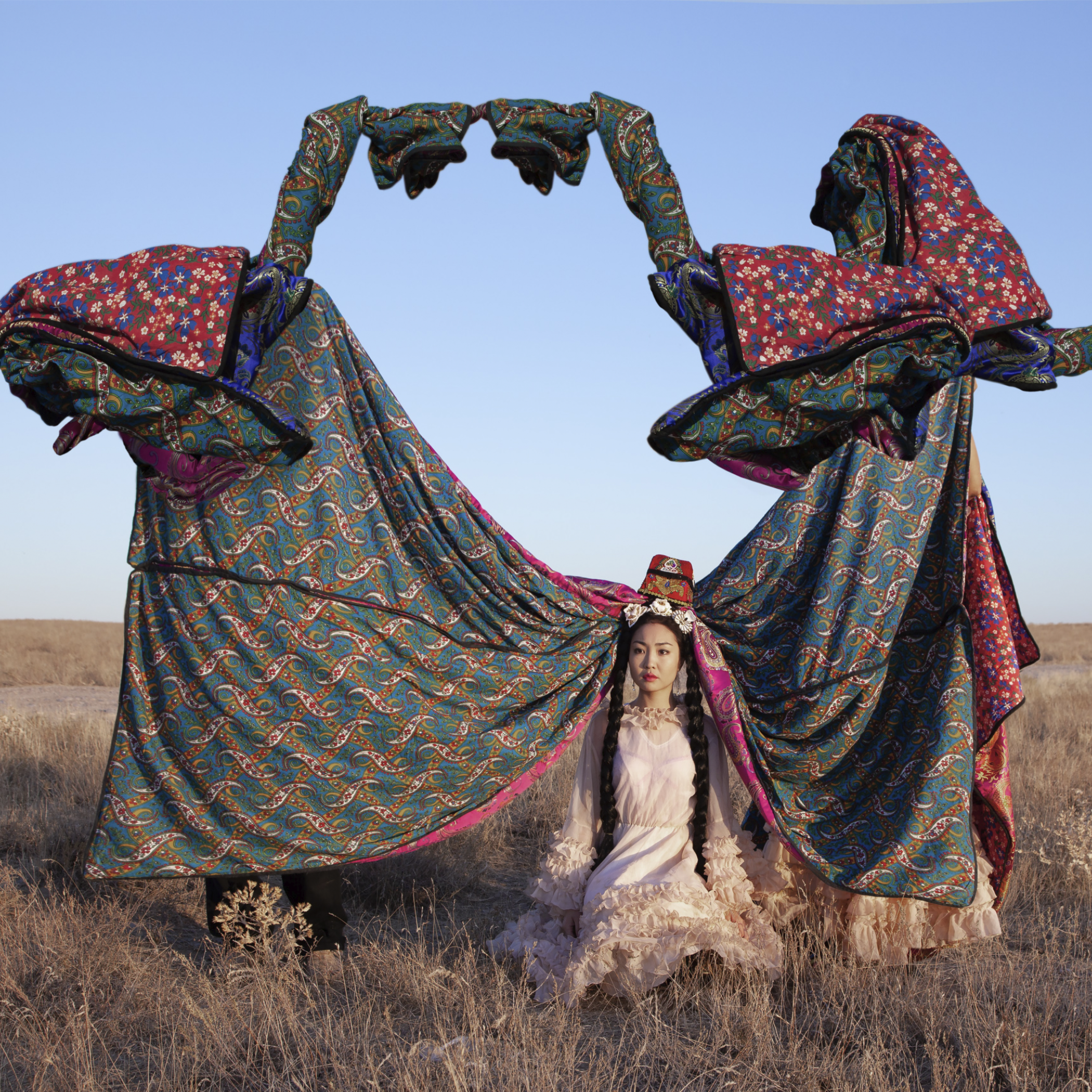
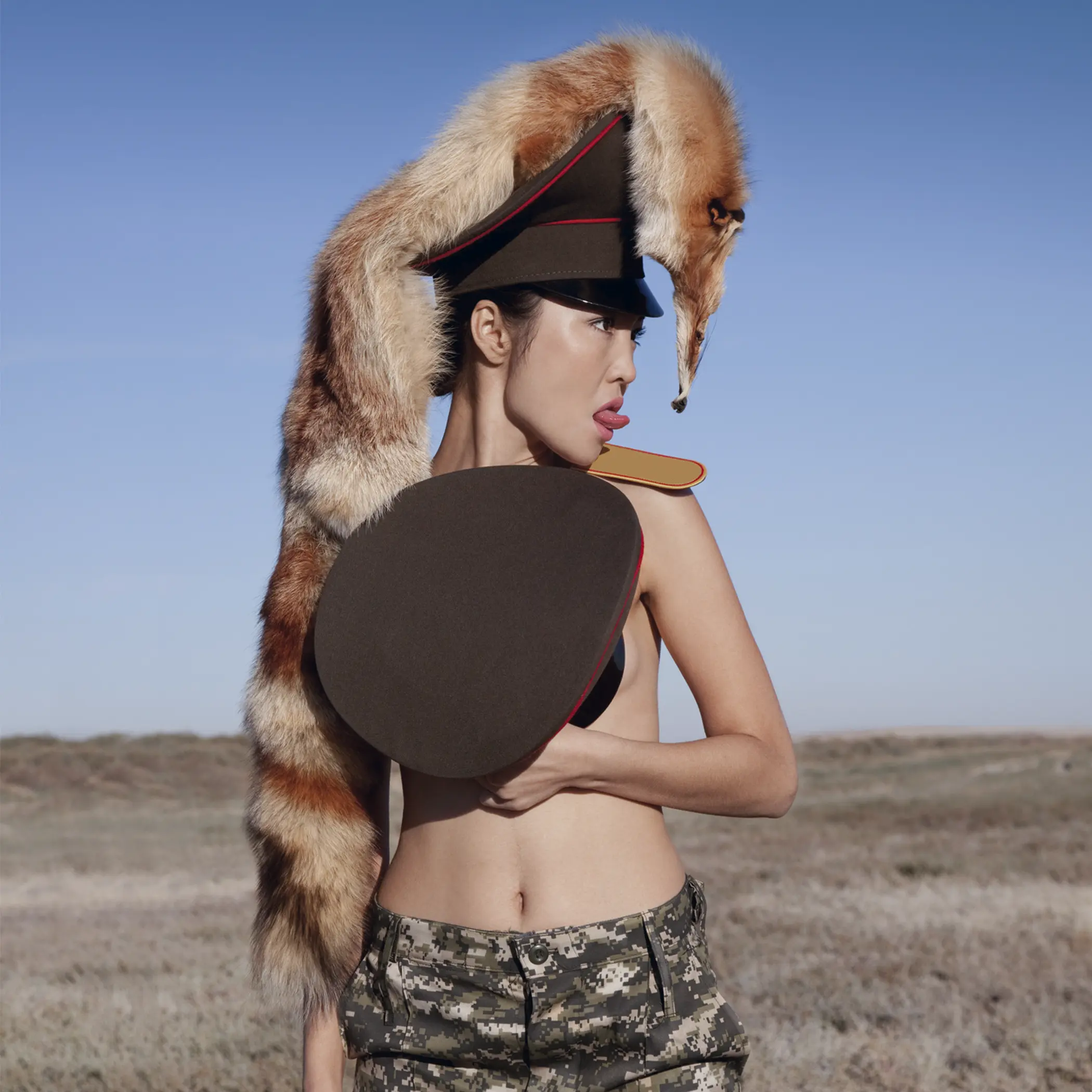

Recognizing the Caspian region’s historical and contemporary significance as a site of transformation within colonial and postcolonial contexts, Menlibayeva collaborates with artists and curators engaged with the region to bring its art, pressing issues, and ongoing transitions to the attention of the global art community. Through these collaborations, her work explores post-Soviet shifts, creating a nuanced dialogue that reflects the region’s multifaceted cultural narratives.