
Guzel Zakirova
Born in Almaty to a Uyghur family that migrated to Kazakhstan during the mid-twentieth century, Guzel Zakirova grew up within a traditional household while simultaneously socializing inside a predominantly Russian-speaking environment. This early experience of being “different”, which she began sensing as early as kindergarten, became foundational to her understanding of self. As the artist recalls, she grew up with the socially imposed feeling of being “third-class”, as if she belonged to a people without a country: a profound experience that later informed her reflections on internalized colonialism, cultural suppression, and belonging. Although no one in her family was professionally connected to art, her earliest fascination with image-making emerged through childhood memories of her father quickly sketching recognizable portraits whenever she felt vulnerable – an impression that left a lasting mark on her understanding of communication and intimacy.
Zakirova graduated from the Academy of Arts of Abai Kazakh National Pedagogical University, and later continued her studies in Chinese painting at Xinjiang Arts Institute. Visually, Zakirova’s work is informed by both Chinese ink painting traditions and the flattened symbolic aesthetics of Uyghur mural art. During her studies in China, she became deeply influenced by the expressive contrast of black ink on white paper and the potential of a minimalist gesture. Alongside painting, the artist’s practice extends into ceramics, metal, weaving, embroidery, archival installation, and video. In recent years, she has studied traditional Uyghur carpet weaving with women artisans in the southern regions of Kazakhstan. In parallel, she has developed an ongoing video practice, including a cycle of films dedicated to collecting and documenting Uyghur migration histories.
“I began looking at my past through a decolonial lens and realised it had touched me too. For a long time, I didn't know who I was. Now I feel I can be a voice for the Uyghur diaspora of Central Asia. It matters to me to show that beyond the titular nations, there are other peoples who have lived through the same experience.”
Editorial Features
Featured works
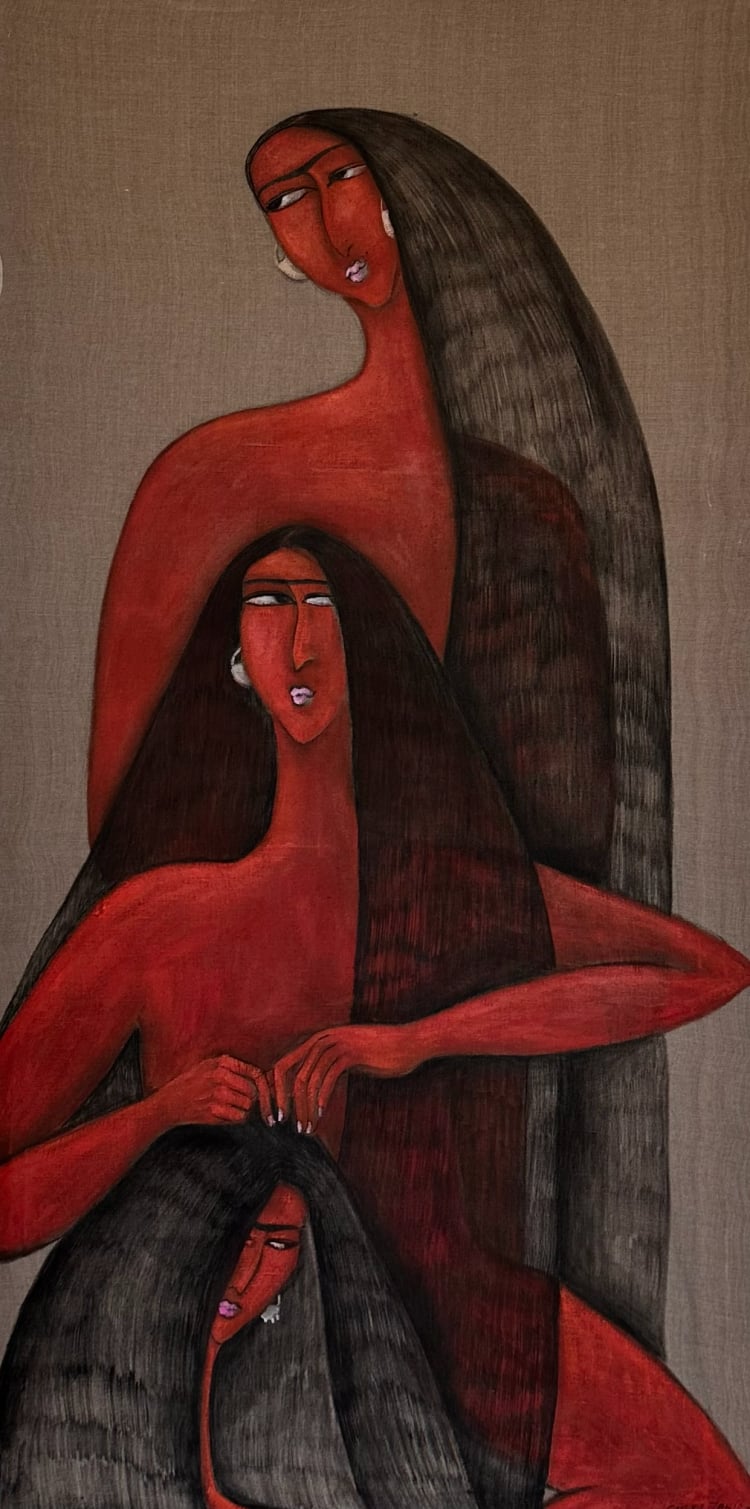
Guzel Zakirova
Childhood memory, 2024
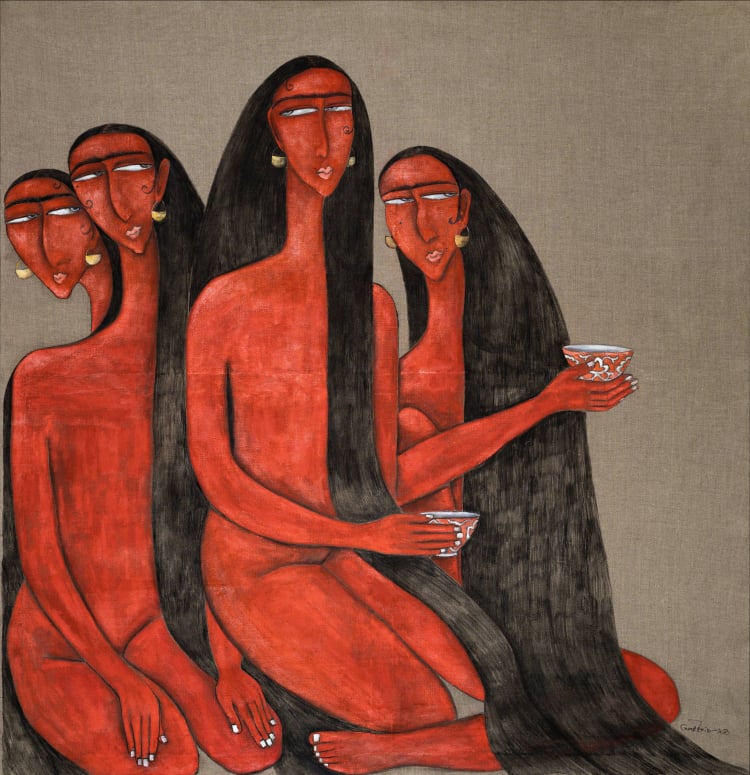
Guzel Zakirova
Hair Louder Than Voice, 2023
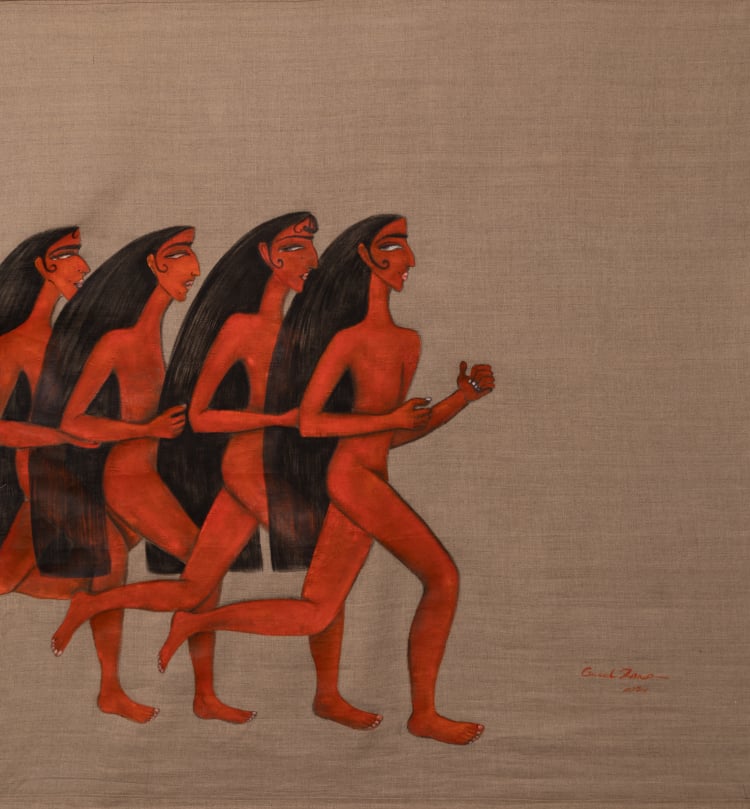
Guzel Zakirova
Life is Marathon, 2024
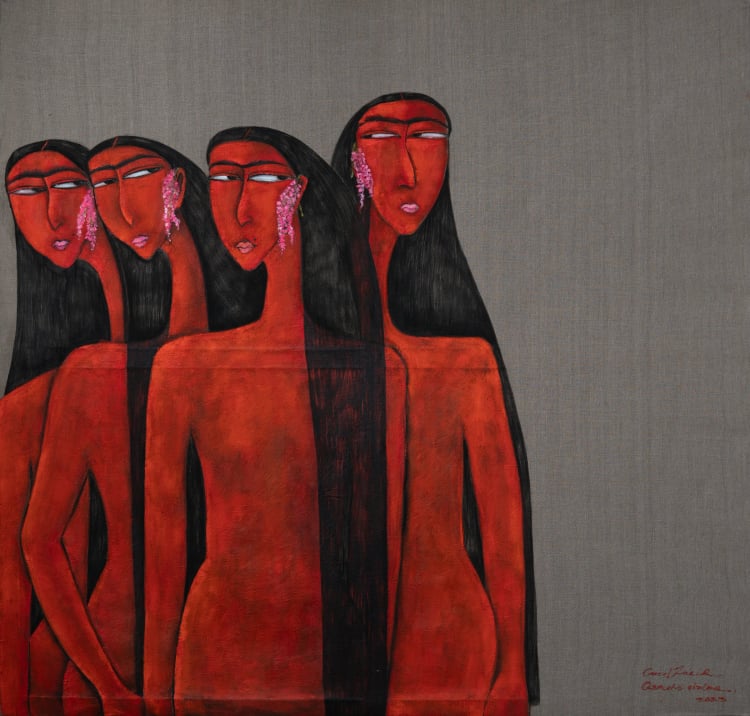
Guzel Zakirova
Qamchégül Qızlar, 2023