“The desert man … has but one face and knows but one truth, and that truth fulfills him.”
- Kurban Said
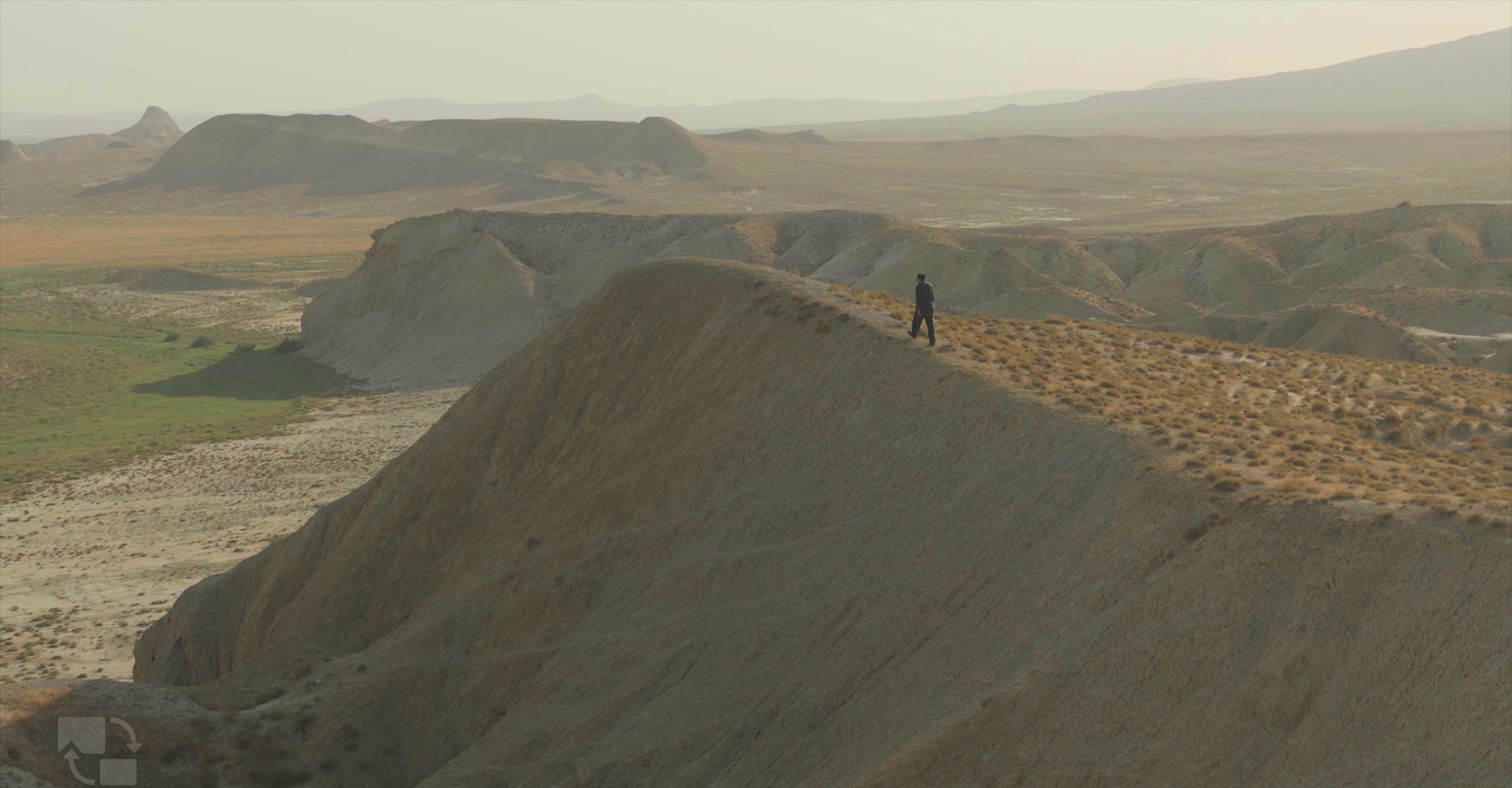
In the steppe, the horizon expands and contracts as the eye follows the sun. Distance is never fixed: it shifts with the light, the wind, and the stance of the observer. What appears remote can suddenly seem close; the boundary between earth and sky becomes almost indistinguishable. The steppe demands sustained attention. It makes the act of looking inseparable from the experience of space.
The steppe establishes a particular scale of vision. Deprived of familiar points of orientation, the eye is drawn instead toward the continuity of the horizon. Terrain is no longer a fixed coordinate but a space of transition, where images and states continually replace one another. To inhabit the steppe is to remain within this movement, to encounter the same landscape in a succession of different conditions.
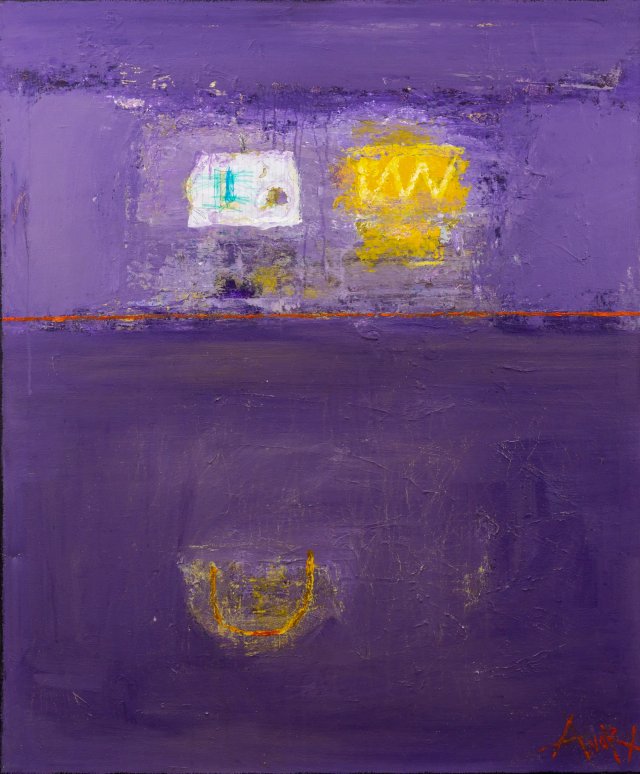
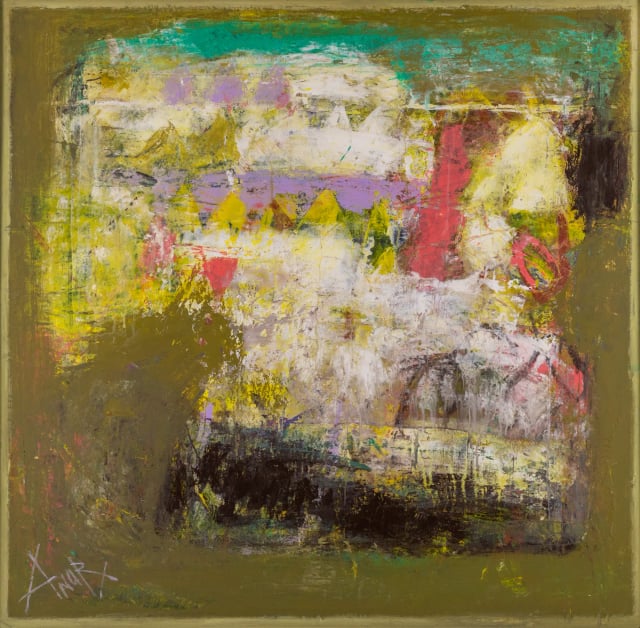
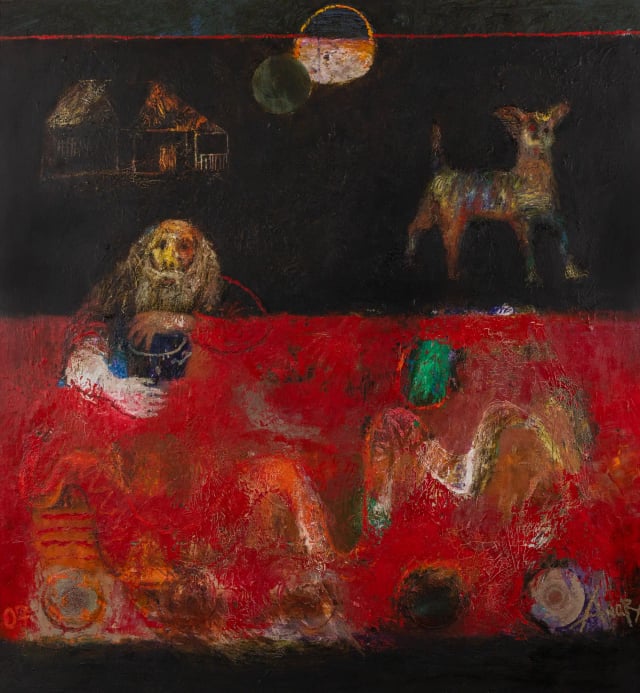
For Anar Huseynzada, the Absheron Peninsula provides the conceptual basis for a broader image of the steppe.
Stretching into the Caspian Sea, Absheron is defined by its arid terrain, and stark openness. Yet in Huseynzada’s work, it gradually exceeds its geographical specificity. It becomes a way of seeing and experiencing space. A particular landscape opens into an interior condition.
This shift underlies much of Huseynzada’s practice. The steppe is understood as an active force that determines the scale of perception. Its vastness can be liberating and disorienting at once; its apparent simplicity conceals the continual struggle of life to persist. Nothing in the steppe remains entirely in its original form. Trees bend beneath the force of the wind; flora pushes through sand; in spring, it is not fields that bloom but sparse, wild flowers that have found water.
For Huseynzada, Absheron remains Absheron, the steppe remains the steppe, but the image is never quite the same. In his work, site shifts into thought, thought into sensation, and sensation back into the natural world. The terrain is therefore continually reconstituted through perception.
The figure of the steppe man that emerges from Huseynzada’s practice is defined by this capacity for movement. He is not simply a person inhabiting a particular terrain, but one whose inner life has acquired the scale of that terrain, large enough to contain continual change. For such a figure, place ceases to function as a coordinate and becomes a mode of thought.